
Water Damage Restoration vs Water Mitigation
Which One Saves Your San Diego Home?
Understanding Water Damage Restoration
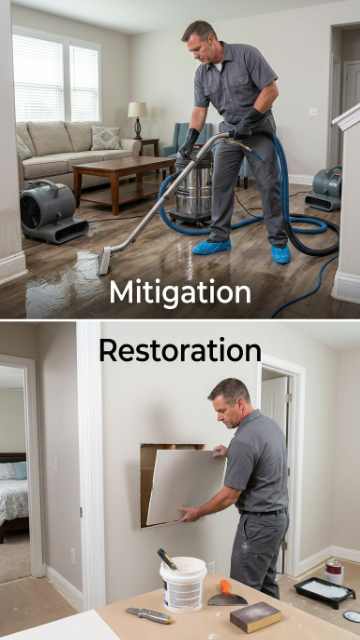
Water damage restoration is the rebuilding phase. It begins once the source of water has been stopped and the structure has been dried out, and it covers everything needed to bring a San Diego property back to its pre-loss condition — repairing or replacing drywall, subfloor, baseboards, cabinetry, insulation, and flooring; repainting; and, where needed, structural repairs to framing or subflooring that absorbed prolonged moisture. A full <a href=”https://smartdryrestoration.com/water-damage-restoration-service/”>water damage restoration service</a> also typically includes mold prevention treatments, since San Diego’s coastal humidity can accelerate growth in wall cavities that stayed damp too long.
Cost for restoration varies widely because it’s tied to the extent of rebuilding required, not just square footage. Minor cosmetic repairs after a small, quickly-caught leak might run a few thousand dollars, while a whole-room rebuild after a slow, hidden leak behind a wall can run into the tens of thousands. Insurance adjusters typically treat restoration as a separate line item from mitigation on a claim, so getting an itemized <a href=”https://smartdryrestoration.com/water-damage-restoration-service/”>water damage restoration</a> estimate matters for reimbursement.
Restoration is the right service when water has already sat long enough to warp materials, when mold has started to form, or when a mitigation crew has already dried the structure and handed off a scope of remaining repairs.
Understanding Water Mitigation
Water mitigation is the emergency response phase — the race against the clock that happens in the first hours and days after water enters a home. It focuses on stopping active water intrusion, extracting standing water, and drying out the structure with industrial air movers and dehumidifiers before secondary damage (warping, mold, structural weakening) sets in. A mitigation crew will typically use moisture meters and thermal imaging to map how far water has traveled inside walls and under flooring, since visible water is rarely the whole story.
In San Diego, mitigation costs are usually driven by category of water (clean, gray, or sewage-contaminated) and how many days of equipment runtime are needed to bring moisture readings back to normal — commonly a few hundred to a few thousand dollars for a contained residential incident. Because mitigation is considered an emergency mitigative measure, insurance companies generally cover it more readily and faster than they cover full restoration work, which is one reason contractors separate the two phases on paper even when the same crew performs both.
Mitigation alone is the right — and sometimes only — service needed when water is caught fast: a washing machine overflow cleaned up within hours, for example, may dry out completely with no lasting damage to repair.
- IICRC Certified Experts
- 24/7 Rapid Response
- Insurance Approved & Hassle-Free
- Competitive Pricing Guaranteed
Side-by-Side Comparison
| Attribute | Water Damage Restoration | Water Mitigation |
|---|---|---|
| Primary Goal | Repair and rebuild damaged materials | Stop water and prevent further damage |
| Timing | After the structure is dry | Immediately after water intrusion, usually within the first 24–48 hours |
| Typical San Diego Cost | $3,000 – $30,000+, scope-dependent | $500 – $4,000, incident-dependent |
| Core Equipment | Framing tools, drywall, flooring materials, and painting supplies | Extraction pumps, air movers, dehumidifiers, and moisture meters |
| Insurance Treatment | Often a separate, itemized claim line | Usually covered quickly as emergency mitigation |
| Typical Duration | Days to several weeks | 2–5 days on average |
| Outcome | Property returned to pre-loss condition | Property stabilized, dry, and safe to rebuild |
Pros and Cons Breakdown
Pros of Water Damage Restoration
- Fully restores the home’s appearance and function, not just its safety
- Addresses hidden structural issues mitigation alone can’t fix
- Often bundled with mold remediation for a single accountable timeline
- Can increase resale value by correcting pre-existing damage during the rebuild
Cons of Water Damage Restoration
- More expensive and time-consuming than mitigation alone
- May require temporary displacement if bedrooms or kitchens are affected
- Insurance reimbursement can be slower and more document-heavy
- Not always necessary if mitigation is fast enough to prevent material damage
Pros of Water Mitigation
- Fast response limits how much damage ultimately needs repair
- Generally lower cost, especially for small or caught-early incidents
- Insurance carriers usually authorize it quickly given the emergency nature
- Reduces mold risk, a major concern in San Diego’s coastal climate
Cons of Water Mitigation
- Doesn’t repair cosmetic or structural damage that’s already occurred
- Homeowners sometimes mistake a “dry” reading for “fully resolved”
- If delayed even a day or two, its effectiveness drops sharply
- Standalone mitigation without a restoration follow-up can leave hidden moisture unaddressed
Which Option Is Better? The Ultimate Showdown
For most San Diego homeowners, this isn’t really an either/or decision — it’s a timeline. Choose water mitigation immediately, without exception, any time you have active or very recent water intrusion. Every hour of delay increases the odds that a manageable leak turns into a restoration-level project, since San Diego’s marine layer humidity does the drying process no favors once materials are already wet.
Choose water damage restoration when mitigation has already happened, or when you’re inspecting a property with older, previously-dried water damage — a common scenario for San Diego homebuyers evaluating a house with a history of roof leaks or slab moisture. If a moisture meter shows readings back to normal but drywall is stained, warped, or musty, that’s a restoration job, not a mitigation one.
The homeowners who spend the most, in both dollars and stress, are usually the ones who tried to skip mitigation and went straight to cosmetic repairs — repainting over a wall that was never fully dried, for instance, which almost always resurfaces as a bigger restoration problem and warrants a follow-up mold inspection within a few months. Budget-conscious homeowners should never treat mitigation as optional to save money; skipping it is what creates the far larger restoration bill later.
Get a San Diego Water Damage Consultation
If you’re not sure which stage your property is in, that uncertainty itself is a signal to get a professional assessment rather than guess. Whether you’re dealing with an active basement flood, a slow leak behind drywall, or a larger disaster response situation, a same-visit evaluation can tell you whether you need mitigation, restoration, or both — and roughly what it will cost. Reach out for a consultation and a clear, itemized scope before any work begins.
Authoritative sources
The guidance on this page is consistent with the following public health and federal sources. Each link goes to the original document.
- EPA — A Brief Guide to Mold, Moisture and Your Home — Sets the widely used threshold that mold covering more than about 10 square feet should be handled professionally, and advises drying wet materials within 24 to 48 hours to prevent growth.
- CDC / NIOSH — Mold, Testing and Remediation — States that thorough visual inspection and musty odour are more reliable indicators than air sampling, and recommends drying wetted materials within 48 hours or removing them.
- EPA WaterSense — Fix a Leak Week — Reports that the average household wastes more than 9,300 gallons a year to leaks, that 9% of homes have leaks wasting 50 gallons or more per day, and that fixing them can cut a water bill by about 10%.
Restoration work on this page follows the IICRC S500 Standard for Professional Water Damage Restoration and, where mold is involved, the IICRC S520 Standard for Professional Mold Remediation — the industry consensus standards that define drying targets, containment and clearance.
Conclusion & Recommendation
Water mitigation and water damage restoration aren’t competing services — they’re two stages of the same recovery process, and understanding the difference helps San Diego homeowners set realistic expectations for timeline, cost, and insurance. If water is actively present or the incident just happened, call for mitigation today. If the structure is already dry but the damage is visible, you’re looking at restoration. When in doubt, a single inspection can settle the question and get the right process moving before secondary damage — mold, warping, or structural weakening — has a chance to set in.
Every minute counts. Our certified team is available 24/7 to extract water, dry structures, and start restoration fast.
Frequently Asked Questions
Is water mitigation the same as water damage restoration?
No. Mitigation stops water and dries the structure; restoration repairs or rebuilds whatever was damaged before or during that process. They're typically sequential, not interchangeable.
Does homeowners insurance cover both water mitigation and water damage restoration?
Usually, yes, but they're often billed and approved separately. Mitigation is generally approved faster as an emergency measure, while restoration may require a more detailed adjuster review.
How fast do I need to start water mitigation after a leak in San Diego?
Ideally within 24-48 hours. Mold can begin developing in that window, especially given San Diego's coastal humidity, so faster response meaningfully reduces the eventual restoration scope.
Can I skip mitigation and go straight to repairs?
It's not recommended. Repairing or repainting over materials that haven't been fully dried often traps moisture, which frequently resurfaces as mold or renewed damage later.
How much does water damage restoration cost in San Diego?
It depends heavily on scope, but residential jobs commonly range from a few thousand dollars for cosmetic repairs to well over $20,000 for extensive structural rebuilding.
How do I know if my property just needs mitigation, or full restoration too?
A moisture meter and visual inspection can usually tell within one visit. If materials are still wet, it's a mitigation job. If they're dry but stained, warped, or musty, restoration is needed.
Will water mitigation prevent mold from developing?
It significantly reduces the risk when done quickly, but it's not a guarantee. Homes with hidden moisture in wall cavities may still need a follow-up mold testing or mold remediation visit even after mitigation is complete.
Is water mitigation more affordable than restoration?
Generally, yes, mostly because it's a shorter process with less material replacement involved. But delaying mitigation almost always increases the eventual restoration cost.
