
Emergency Water Damage Checklist
Emergency Water Damage Checklist for San Diego Homes and Businesses
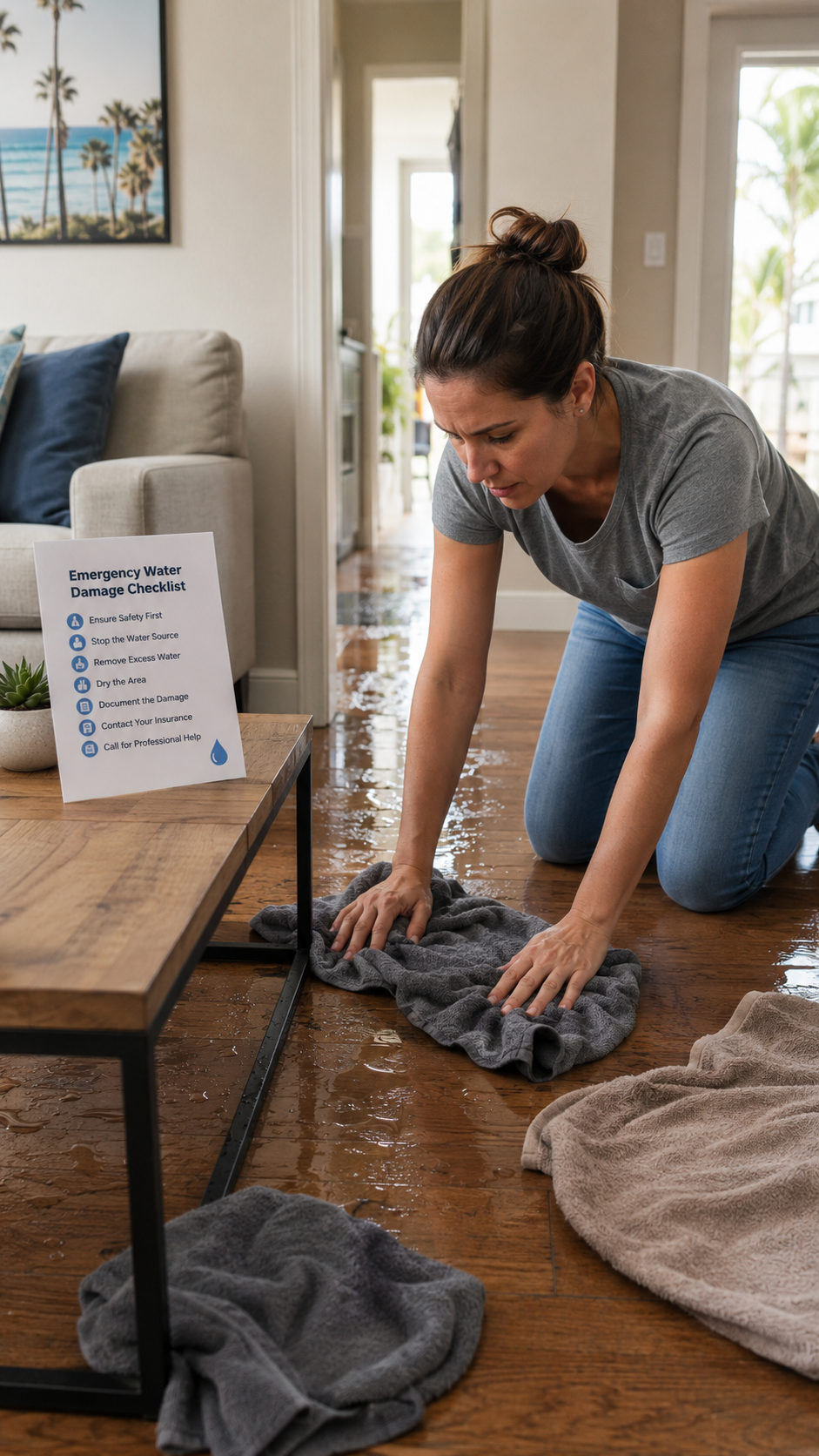
When a pipe bursts, a water heater fails, or a storm sends water pouring into your property, the first hour matters more than almost any other. This Emergency Water Damage Checklist was built by the local restoration team at Smart Dry Restoration to help San Diego homeowners and business owners take the right steps immediately, protect their property, and know exactly when to call in a professional for water damage restoration. Whether you’re dealing with a slow leak or a sudden flood, this checklist walks you through what to do first, what to avoid, and how to get water damage under control before it becomes a much bigger — and more expensive — problem.
Smart Dry Restoration has spent years responding to water emergencies throughout San Diego, from coastal condos to inland family homes, and this checklist reflects what actually works in real water damage cleanup situations, not just generic advice.
Why an Emergency Water Damage Checklist Matters
Water doesn’t wait. Within the first 24 to 48 hours, moisture can soak into drywall, flooring, baseboards, and furniture, creating the ideal environment for mold growth and structural weakening. The longer water sits, the more it spreads — often into areas you can’t see, like wall cavities, subfloors, and crawl spaces.
Having a clear checklist ready before an emergency happens (or pulling one up the moment it does) helps you:
- Reduce the amount of standing water and moisture damage
- Protect personal belongings, furniture, and flooring
- Avoid safety hazards like electrical exposure or contaminated water
- Support your insurance claim with documentation
- Get professional help involved before mold or structural issues set in
Acting quickly and correctly in those first critical hours can mean the difference between a manageable cleanup and a full-scale restoration project — which is why many San Diego residents rely on disaster response teams that can mobilize immediately once the emergency call comes in.
Common Problems This Checklist Helps You Solve
Every water emergency looks a little different, but most San Diego cases fall into a few recognizable categories. Knowing which one you’re dealing with helps you respond appropriately.
Burst or leaking pipes. Older homes throughout San Diego, especially in neighborhoods with aging plumbing, are prone to pipe failures that can release large volumes of water quickly.
Water heater failure. A ruptured tank can flood a garage or utility closet in minutes, often going unnoticed until water has already spread across flooring.
Washing machine or appliance overflow. Supply line failures and overflow incidents are among the most common causes of indoor flooding, often requiring a dedicated washing machine flood clean up response, and they frequently affect hardwood floors and adjacent rooms.
Roof leaks and storm intrusion. During San Diego’s rainy season, roof leaks can allow water to travel along ceilings and walls well away from the original entry point.
Sewage backups. These involve contaminated water and require specialized handling through professional sewage cleanup San Diego services, not standard cleanup methods.
Slow, hidden leaks. Sometimes the biggest damage comes from leaks you don’t notice right away — behind walls, under cabinets, or beneath flooring — which is why early moisture detection is so important.
If you’re unsure which category your situation falls into, our team can help you assess it quickly over the phone.
Your Step-by-Step Emergency Water Damage Checklist
Step 1: Prioritize Safety First
Before touching anything, make sure the area is safe. If water is near electrical outlets, panels, or appliances, avoid the area and shut off power at the breaker if you can do so safely. If the water is contaminated (such as from a sewage backup), avoid direct contact and keep children and pets away.
Step 2: Stop the Water Source
If the flooding is from a plumbing issue, shut off your main water valve. If it’s from an appliance, unplug and disconnect it if it’s safe to do so. Stopping the source is the single most important step in limiting damage.
Step 3: Document Everything
Take photos and videos of the affected areas, damaged belongings, and the source of the water before you begin cleanup. This documentation is essential for insurance claims and helps our team assess the situation more accurately when we arrive.
Step 4: Remove Standing Water Where Possible
If it’s safe, begin removing standing water with towels, a wet/dry vacuum, or buckets. Every bit of water removed early reduces the amount of moisture that soaks into flooring and walls.
Step 5: Move and Elevate Belongings
Lift furniture legs onto blocks or foil, move rugs and electronics out of the affected area, and separate wet items from dry ones. This can prevent staining, warping, and secondary damage.
Step 6: Increase Airflow and Ventilation
Open windows, run fans, and use a dehumidifier if you have one available. Increasing air circulation helps slow moisture absorption while you wait for professional help.
Step 7: Call a Licensed Water Damage Restoration Company
This is the point where professional equipment and expertise make the biggest difference. Industrial extraction tools, moisture meters, and commercial-grade drying equipment can remove water and moisture far more effectively than household tools, which reduces the risk of mold and long-term structural damage.
Step 8: Avoid DIY Mistakes That Make Things Worse
Don’t use a regular household vacuum on standing water, don’t run electrical appliances in wet areas, and don’t assume carpet or flooring that “feels dry” on the surface is actually dry underneath. Hidden moisture is one of the most common causes of mold growth after a water event.
- IICRC Certified Experts
- 24/7 Rapid Response
- Insurance Approved & Hassle-Free
- Competitive Pricing Guaranteed
Why Choose Smart Dry Restoration
San Diego residents choose Smart Dry Restoration because our team understands the urgency of water emergencies and responds with the right equipment, experience, and process every time. We handle everything from initial water damage restoration and water damage cleanup to more complex situations like flood damage cleanup and basement flood cleanup.
Our technicians are trained to assess not just what’s visible, but what’s happening behind walls and under flooring using professional moisture detection tools. We also understand how quickly untreated moisture can turn into a mold problem, which is why our moisture and leak detection services are built into our restoration process rather than treated as an afterthought.
Whether the damage is isolated to one room or affects an entire property, our approach is designed to minimize disruption, protect what can be saved, and restore your space as efficiently as possible.
Water Damage Response in San Diego and Nearby Areas
San Diego’s mix of coastal humidity, older housing stock, and seasonal storms creates a unique set of water damage risks. Homes near the coast can experience higher ambient moisture that slows natural drying, while properties further inland may deal with aging plumbing systems more prone to failure. Multi-story condos and apartment buildings throughout the county also face a distinct challenge: water damage in one unit can quickly affect the units below it, making a fast response even more important.
We regularly respond to water emergencies throughout San Diego and the surrounding communities, working with homeowners, property managers, and business owners who need a team that understands local housing types, from hardwood-floored craftsman homes to modern high-rise units. If you’re located in San Diego or one of the areas nearby, our team is positioned to respond quickly when water damage strikes.
Hardwood flooring is especially common throughout San Diego homes, and it requires specialized handling after water exposure. Our hardwood floor drying in San Diego process is designed specifically to prevent warping, cupping, and long-term structural loss. Similarly, appliance-related flooding — a frequent cause of indoor water damage — is addressed through our dedicated washing machine flood clean up service.
What Affects Cost, Timeline, and Results
Every water damage situation is different, so pricing and timelines depend on several factors rather than a flat rate. Generally, cost and duration are influenced by:
- The size of the affected area — a single room versus multiple floors
- The category of water involved — clean water, gray water, or contaminated water from a source like a sewage cleanup situation
- How long the water sat before treatment began, since extended exposure often requires more extensive drying or material removal
- The type of flooring and building materials affected, as hardwood, carpet, and drywall each respond differently to moisture
- Whether mold has already begun to develop, which may require coordination with our mold damage restoration team
Most straightforward water extractions and drying projects can be completed within a few days, while more extensive damage involving structural drying or mold remediation may take longer. Our team will walk you through a clear assessment and expectations once we’ve evaluated your property in person.
Don’t Wait — Water Damage Gets Worse By the Hour
Every hour you wait after water damage occurs increases the risk of structural harm, mold growth, and higher restoration costs. If you’re dealing with a leak, flood, or any kind of water emergency in San Diego, don’t try to manage it alone. Contact Smart Dry Restoration now for a fast, professional response. Our team is ready to assess the damage, stop it from spreading, and guide you through every step of the emergency water damage checklist and beyond.
Call (858) 433-5100 or email info@smartdryrestoration.com to request immediate assistance. The sooner we respond, the more we can save.
Authoritative sources
The guidance on this page is consistent with the following public health and federal sources. Each link goes to the original document.
- Ready.gov (FEMA) — Prepare for a Flood — Official federal guidance on flood safety, including that one foot of moving water can sweep a vehicle away and that you should return home only when authorities confirm it is safe.
- EPA — A Brief Guide to Mold, Moisture and Your Home — Sets the widely used threshold that mold covering more than about 10 square feet should be handled professionally, and advises drying wet materials within 24 to 48 hours to prevent growth.
- CDC — About Mold and Your Health — Links damp indoor environments to respiratory symptoms including coughing, wheezing and congestion, and notes that people with asthma, allergies or weakened immune systems may react more severely.
Restoration work on this page follows the IICRC S500 Standard for Professional Water Damage Restoration and, where mold is involved, the IICRC S520 Standard for Professional Mold Remediation — the industry consensus standards that define drying targets, containment and clearance.
Every minute counts. Our certified team is available 24/7 to extract water, dry structures, and start restoration fast.
Frequently Asked Questions
What should I do first when I discover water damage in my home?
Prioritize safety by avoiding electrical hazards, then stop the water source if possible by shutting off your main valve or unplugging the affected appliance. Document the damage with photos, then begin removing standing water if it's safe to do so. Call a professional restoration company as soon as possible to prevent the damage from spreading further.
How quickly does water damage turn into mold in San Diego?
Mold can begin developing within 24 to 48 hours in the right conditions, especially in San Diego's humid coastal areas. This is why fast water extraction and thorough drying are so important. If moisture is left untreated for several days, the likelihood of mold growth increases significantly, often requiring additional remediation.
Is it safe to clean up water damage myself?
Minor water intrusion, like a small spill, can often be handled with towels and a wet/dry vacuum. However, larger flooding events, contaminated water, or situations involving electrical risk should be left to professionals with proper equipment and safety training to avoid injury or incomplete drying.
Does homeowners insurance cover emergency water damage?
Many homeowners insurance policies cover sudden and accidental water damage, such as a burst pipe, though coverage varies by policy and provider. Gradual leaks or neglected maintenance issues are often excluded. It's best to review your policy details and document the damage thoroughly to support your claim.
How do I know if water damage has spread behind my walls?
Signs include discoloration, a musty smell, soft or bubbling drywall, and peeling paint. Because moisture can travel along framing and insulation, professional moisture meters and infrared tools are often needed to detect hidden water that isn't visible on the surface.
What's the difference between water damage restoration and water damage cleanup?
Cleanup typically refers to removing standing water and drying the affected area, while restoration includes the full process of repairing and returning the property to its original condition, which may involve replacing flooring, drywall, or other materials damaged beyond drying.
Do you offer emergency water damage services near me in San Diego?
Yes, Smart Dry Restoration responds to water damage emergencies throughout San Diego and the surrounding areas. Because water spreads quickly, we prioritize a fast response to limit damage and begin the drying process as soon as possible after you contact us.
Can wet hardwood floors be saved after water damage?
In many cases, yes, if the water is extracted quickly and proper drying equipment is used. The likelihood of saving hardwood floors depends on how long the wood was exposed to moisture and how much the boards have absorbed. A professional assessment can determine the best course of action.
