
Water Extraction vs Water Removal
Which One Actually Saves Your Home?
Water extraction refers to the rapid, mechanical pumping-out of standing water using industrial equipment, while water removal is the broader process that includes extraction plus drying, dehumidifying, and sanitizing the space. In short: extraction is the first urgent step, and removal is the complete restoration process around it. If you’re dealing with a flooded home in San Diego, you almost always need both — and understanding how they differ helps you know what you’re paying for and why timing matters so much. For a closer look at how these terms get used interchangeably (and where that causes confusion), see our breakdown of water extraction and water removal in San Diego.
Understanding Water Extraction
Water extraction is the emergency-response phase of water damage restoration. It’s the physical act of pulling standing or pooled water out of a structure using submersible pumps, truck-mounted extraction units, and industrial wet vacuums. When a pipe bursts, a washing machine overflows, or storm water breaches a foundation, water extraction is the very first call a restoration company makes before anything else happens.
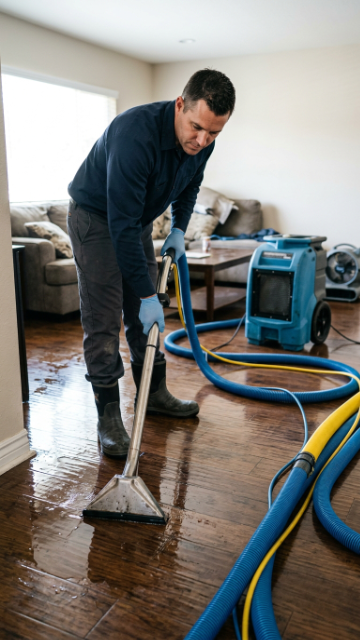
How it works: Technicians arrive with moisture meters to map the extent of water intrusion, then deploy pumps and extraction wands to remove free-standing water from floors, carpets, and subfloors. For San Diego homes — many of which feature hardwood, tile, or engineered flooring rather than the carpet-heavy builds common in colder climates — extraction crews pay close attention to how quickly water seeps beneath baseboards and into wall cavities, since coastal humidity can accelerate secondary damage if water isn’t pulled fast enough.
Typical costs: Water extraction alone (without full drying and restoration) generally runs anywhere from a few hundred dollars for a small residential incident to well over a thousand dollars for large-scale flooding, depending on square footage, water category, and equipment needed.
Core benefits: Water extraction stops the damage clock. The longer water sits, the more it saturates building materials, warps flooring, and creates conditions for mold growth — something that can begin in as little as 24 to 48 hours in San Diego’s coastal humidity.
Ideal use cases: Active flooding, burst pipes, storm surges, and any scenario where visible standing water is present and needs to be removed immediately, before the drying process can even begin. If a washing machine or appliance is the culprit, our Washing Machine Flood Clean Up service covers this exact scenario.
Understanding Water Removal
Water removal is the umbrella term for the entire restoration process — it starts with extraction but continues through structural drying, dehumidification, moisture monitoring, and sanitization. Where extraction is a single urgent action, water removal is a multi-day process designed to bring a property back to a safe, dry, pre-loss condition.
How it works: After the standing water is extracted, technicians position industrial air movers and dehumidifiers throughout the affected area. They use moisture meters and thermal imaging to track hidden dampness inside walls, under flooring, and in crawl spaces — areas where San Diego’s older housing stock and slab foundations can trap moisture longer than expected. The water removal process typically runs three to five days, with daily monitoring to confirm humidity levels return to normal before equipment is removed.
Typical costs: A full water removal and drying process, including equipment rental, labor, and monitoring, commonly ranges from $1,500 to $5,000+ for residential properties, depending on the water category (clean, gray, or black water), square footage, and whether structural materials like drywall or subfloor need removal.
Core benefits: Comprehensive water removal addresses what extraction alone can’t — the lingering moisture trapped in porous materials that leads to mold, wood rot, and structural weakening if left unaddressed. This is why most restoration plans pair water removal with a follow-up Mold Damage Restoration assessment once the structure is fully dry.
Ideal use cases: Any situation following a flood, leak, or water intrusion where materials have absorbed moisture, not just where water is pooling on the surface. This is the process homeowners typically need for insurance documentation as well.
- IICRC Certified Experts
- 24/7 Rapid Response
- Insurance Approved & Hassle-Free
- Competitive Pricing Guaranteed
Side-by-Side Comparison
| Attribute | Water Damage Restoration | Water Mitigation |
|---|---|---|
| Primary Goal | Repair and rebuild damaged materials | Stop water and prevent further damage |
| Timing | After the structure is dry | Immediately after water intrusion, usually within the first 24–48 hours |
| Typical San Diego Cost | $3,000 – $30,000+, scope-dependent | $500 – $4,000, incident-dependent |
| Core Equipment | Framing tools, drywall, flooring materials, and painting supplies | Extraction pumps, air movers, dehumidifiers, and moisture meters |
| Insurance Treatment | Often a separate, itemized claim line | Usually covered quickly as emergency mitigation |
| Typical Duration | Days to several weeks | 2–5 days on average |
| Outcome | Property returned to pre-loss condition | Property stabilized, dry, and safe to rebuild |
Still not sure which category your situation falls into? Our side-by-side guide comparing water damage restoration vs. cleanup in San Diego breaks down a few more adjacent terms homeowners often mix up.
Pros and Cons Breakdown
Pros of Water Extraction
- Fast: standing water can be removed within hours of arrival, limiting further spread
- Lower immediate cost if the water event was minor and caught early
- Prevents water from migrating further into unaffected areas of the home
Cons of Water Extraction
- Doesn’t address moisture already absorbed into flooring, drywall, or subfloor
- Without follow-up drying, mold and mildew risk remains high
- Not sufficient on its own for insurance claims requiring full moisture documentation
Pros of Water Removal
- Comprehensive: eliminates both visible water and hidden moisture
- Reduces long-term risk of mold, wood rot, and structural damage
- Includes moisture monitoring that supports insurance claims
Cons of Water Removal
- Higher upfront cost than extraction alone
- Longer timeline, since drying equipment often needs to run for multiple days
- May require temporary displacement if structural materials need removal
Which Option Is Better? The Ultimate Showdown
The truth is, water extraction and water removal aren’t really competitors — they’re sequential steps in the same process, and the real question is whether you need extraction alone or the full water removal treatment. If you catch a small spill immediately (say, a dishwasher leak discovered within the hour, with no absorption into flooring or drywall), water extraction by itself may be enough to prevent further issues.
However, if water has been present for more than a few hours, has touched carpet, hardwood, or drywall, or came from an uncontrolled source like a burst pipe or storm flooding, water removal is the safer and more cost-effective choice long-term. Choosing extraction alone in these cases often leads to a second, more expensive call a few weeks later once mold has already taken hold behind the walls.
Choose water extraction alone if: the water event was caught within minutes, no absorption occurred, and a professional confirms no moisture is trapped in materials.
Choose full water removal if: water sat for any meaningful length of time, touched porous materials, or came from a significant source like flooding, sewage backup, or a major pipe failure — which is the case for most San Diego water damage incidents given how quickly moisture spreads through slab foundations and coastal humidity compounds the risk.
For homeowners weighing cost against long-term risk, it’s worth remembering that the price difference between extraction-only and full water removal is often far smaller than the cost of repairing mold damage or replacing rotted subfloor months later. A Moisture & Leak Detection inspection can help determine exactly how far water has traveled before you decide which service level you actually need.
Real-World San Diego Scenarios
San Diego’s mix of older coastal homes, newer slab-foundation builds, and a rainy season that can bring sudden downpours after long dry stretches means water damage here doesn’t always look like it does elsewhere. A property near the coast may deal with humidity-driven secondary damage even after extraction is complete, while inland homes on clay soil can see water pooling around foundations that requires both extraction and structural drying. Local building codes in San Diego County also often require documented moisture readings before drywall or flooring repairs are approved, which is another reason full water removal — not extraction alone — tends to be the standard recommendation from local restoration professionals.
If your situation involves specific damage types, these related services may also be relevant: Basement Flood Cleanup, Hardwood Floor Drying in San Diego, and Washing Machine Flood Clean Up. For a deeper look at how professionals handle the technical side of this process, see our guide on how professionals perform water extraction and drying in San Diego, or check out this cost breakdown for rapid water extraction in San Diego.
For homeowners still unsure which term applies to their situation, our related breakdown of water mitigation vs. water restoration in San Diego covers adjacent terminology you may also encounter when speaking with your insurance adjuster.
Get Help Fast: San Diego Water Damage Consultation
If you’re currently dealing with standing water or suspect hidden moisture in your San Diego home, don’t wait to find out whether you need extraction, full removal, or both — a fast response makes the biggest difference in preventing mold and structural damage. Our team offers prompt assessments and can walk you through exactly what your property needs. Visit our Water Damage Restoration Service page to schedule a consultation, or explore our Water Damage Cleanup and Flood Damage Cleanup services for more details on how we handle water emergencies across San Diego.
Authoritative sources
The guidance on this page is consistent with the following public health and federal sources. Each link goes to the original document.
- EPA — A Brief Guide to Mold, Moisture and Your Home — Sets the widely used threshold that mold covering more than about 10 square feet should be handled professionally, and advises drying wet materials within 24 to 48 hours to prevent growth.
- CDC / NIOSH — Mold, Testing and Remediation — States that thorough visual inspection and musty odour are more reliable indicators than air sampling, and recommends drying wetted materials within 48 hours or removing them.
- EPA WaterSense — Fix a Leak Week — Reports that the average household wastes more than 9,300 gallons a year to leaks, that 9% of homes have leaks wasting 50 gallons or more per day, and that fixing them can cut a water bill by about 10%.
Restoration work on this page follows the IICRC S500 Standard for Professional Water Damage Restoration and, where mold is involved, the IICRC S520 Standard for Professional Mold Remediation — the industry consensus standards that define drying targets, containment and clearance.
Conclusion & Recommendation
Water extraction and water removal solve two different but connected problems: one gets rid of the water you can see, and the other makes sure the moisture you can’t see doesn’t turn into a much bigger issue. For most San Diego homeowners dealing with anything beyond a minor, immediately-caught spill, the safest and most cost-effective path is full water removal — extraction plus complete drying and monitoring — rather than extraction alone. When in doubt, a professional moisture assessment is the fastest way to know exactly which service level your home actually needs.
Every minute counts. Our certified team is available 24/7 to extract water, dry structures, and start restoration fast.
Frequently Asked Questions
1. Is water extraction the same as water removal?
No. Water extraction is the process of physically pumping out standing water, while water removal is the broader term that includes extraction plus drying, dehumidifying, and sanitizing the affected area.
2. How long does water extraction take?
Water extraction itself is usually completed within a few hours, depending on the volume of water and the size of the affected area.
3. How long does full water removal take?
The complete water removal process, including structural drying and moisture monitoring, typically takes three to five days, though larger or more severe cases can take longer.
4. Do I need water removal if I already extracted the water myself?
In most cases, yes. DIY extraction removes visible water but rarely addresses moisture trapped in flooring, drywall, or subfloor, which can lead to mold if not professionally dried and monitored.
5. How much does water extraction cost in San Diego?
Water extraction alone generally costs a few hundred dollars up to around $1,000 or more, depending on square footage and water category.
6. How much does full water removal cost in San Diego?
Full water removal, including drying equipment and monitoring, typically ranges from $1,500 to $5,000 or more depending on the extent of damage.
7. Will my insurance cover water extraction and water removal?
Many homeowner's insurance policies cover sudden and accidental water damage, including extraction and removal costs, though coverage depends on the cause of the water intrusion and your specific policy — check with your provider to confirm.
8. Can mold grow even after water extraction is complete?
Yes. If moisture remains trapped in walls, flooring, or subfloor after extraction, mold can begin developing within 24 to 48 hours, which is why full water removal and drying is usually recommended. If you're already seeing signs, our Mold Remediation in San Diego team can assess the extent of it.
9. What's the difference between water removal and water mitigation?
Water removal focuses specifically on extracting and drying out water, while water mitigation is a broader term that can also include steps to prevent further damage, such as tarping a roof or shutting off a water source.
10. Should I call a professional for water extraction or try to handle it myself?
For small, immediately-caught spills, DIY extraction with a wet vac may be sufficient. For anything larger, or if water has been present for more than an hour, a professional assessment is strongly recommended to prevent hidden moisture damage.
